Pause for a moment. I started writing this a few weeks ago and the wider world has become even more turbulent. I know there are places where the sky threatens a more deadly deluge than rain.
Yet…I go in search of springtime magic and spend most of the walk looking down. The sky is grey, gloomy and threatening more rain, but the ground is full of bright surprises.
Old friends springing into new life.
Each day, certainly each week, there’s a new discovery. Spring comes in waves of colour. It starts early with sparkly white splashes of snowdrops, of course. This year, thriving in cold, wet ground, they seemed bigger and better than ever. And lasted longer, coinciding with the first bursts of yellow – the aconites and miniature narcissi beneath a circle of conifers.
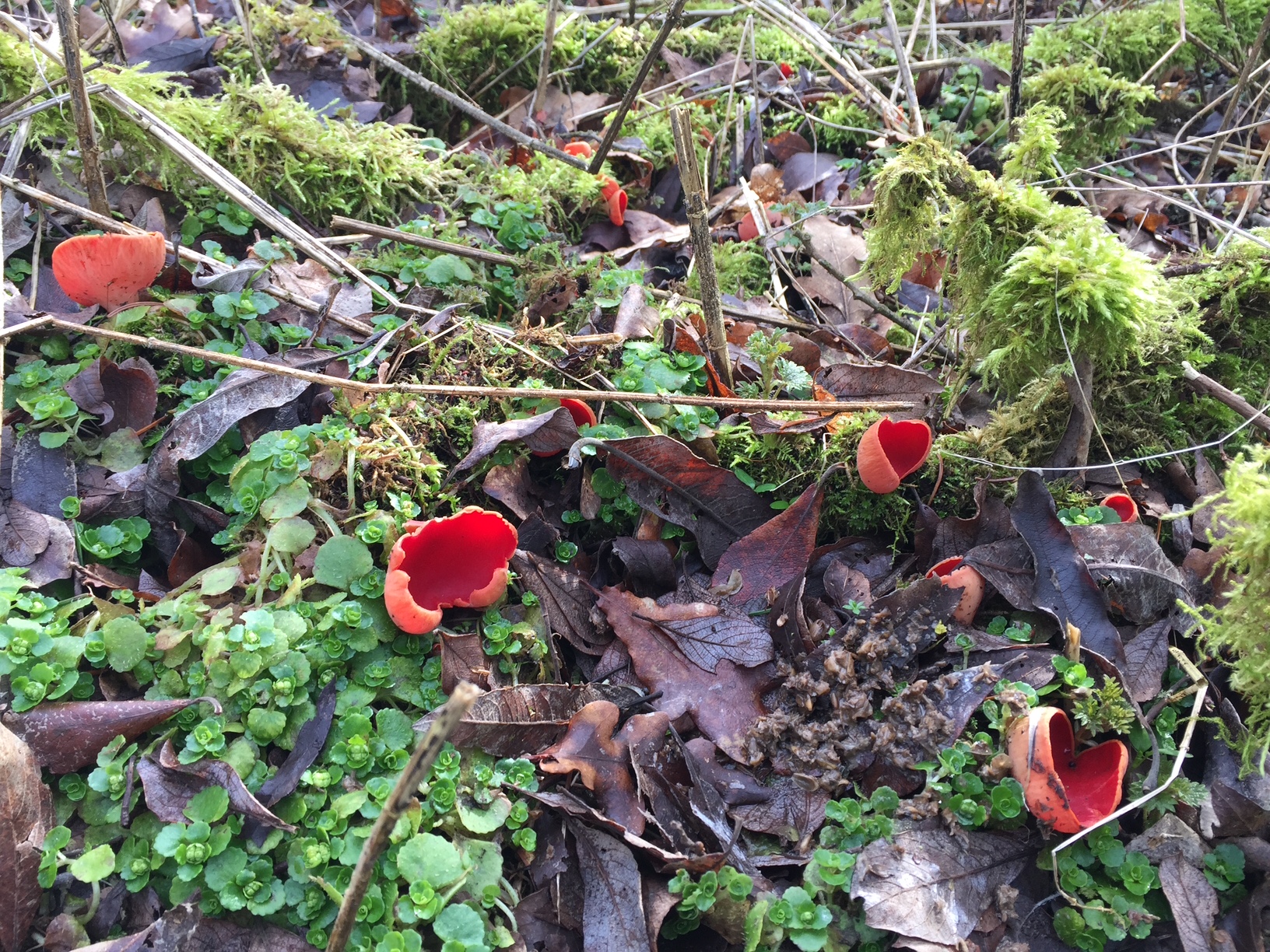
And there was some real fairy magic. Here last month. Gone today. Scarlet Elf Cups (the fungus Sarcoscypha coccinea) don’t last long but each year they pop up, a startling red among green moss on logs of rotting willow. Once you get your eye in there’s quite an elf cup feast in the old quarry clearing and along banks of the stream.


Welcome to spring at Pond Cottage
Pause for a moment. I started writing this a few weeks ago and the wider world has become even more turbulent. I know there are places where the sky threatens a more deadly deluge than rain. Through the kitchen window this morning I see red squirrels and birds busily stocking up at the feeders; the mating season is a hungry time. And all the while, news headlines remind me how many thousands of people, bereaved and displaced by a needless war, must be looking at landscapes completely destroyed: homes, gardens, wildlife and all.
“We lived happily during the war,” Ilya Kaminsky, a young Ukrainian exile poet wrote from the US as Russia invaded his homeland in 2013.
Yet, we do. Or should. We must celebrate and nurture the good things of life. It is a kind of defiance against tyranny. So let’s go for another walk in the garden where colours are rapidly changing. Now the ground is covered in bigger, brighter sweeps of yellow.

Daffodils. They are all doing well – especially the blaze of Jetfire under the Korean fir (above). But right now I’m looking for the oldest specimens under trees around the pond. Simply beautiful. They are probably the wild Narcissus pseudonarcissus – ‘Lenten Lilies’ – the reason many local people call this the ‘lily pond’. No daffodils are truly native to Scotland, but these look as if they belong.
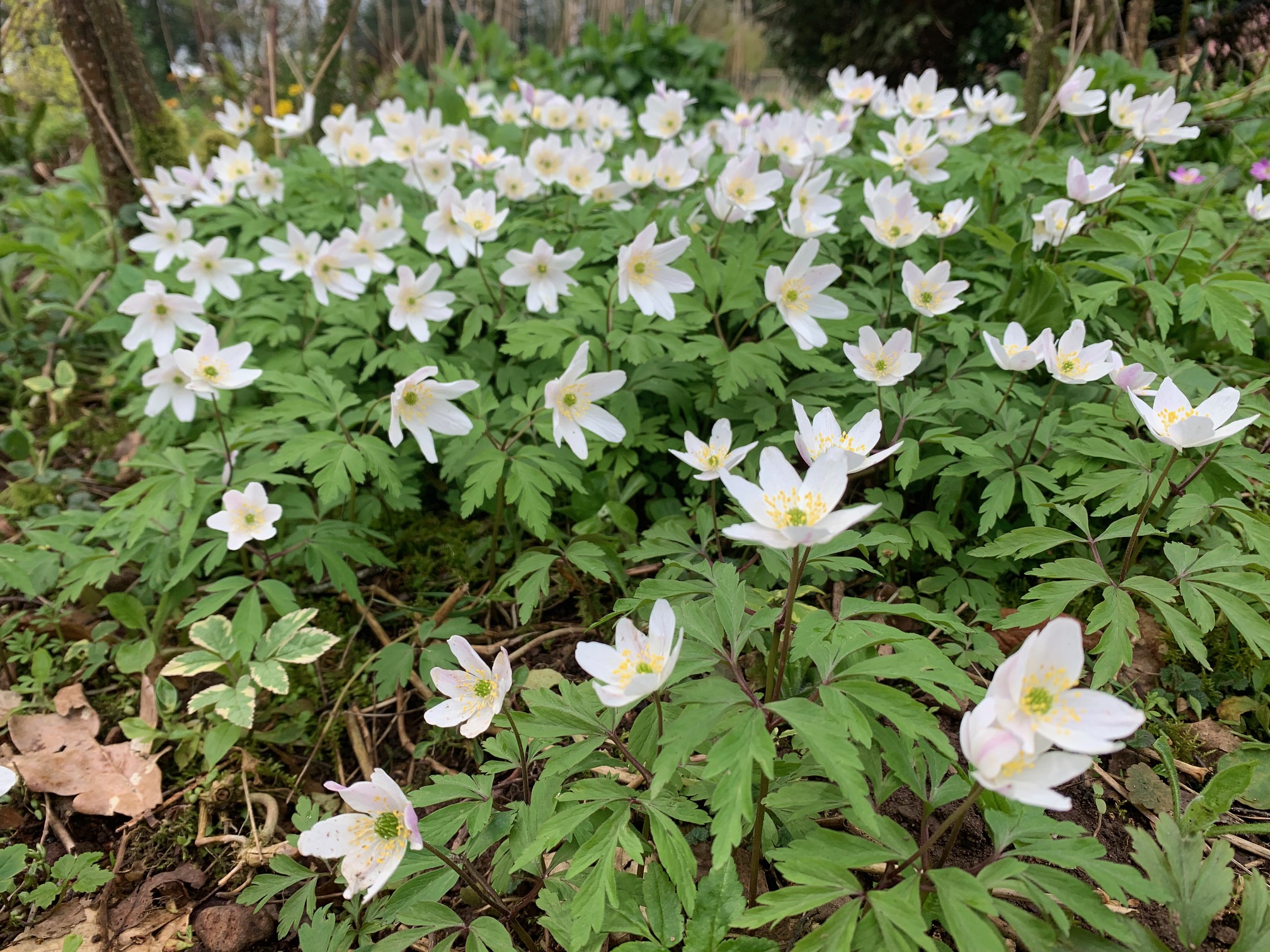
There’s still a dazzle of white under trees but now snowdrops have given way to a wonderfully cheering spread of wood anemones. According to Plantlife they are very slow growing (‘six feet in a hundred years!’) but I’m inclined to doubt that. Our patches are only ten years old and seem to be spreading well, but I won’t be around to contradict Plantlife in a hundred years…
By the time I get to the beechwood the ground is bright green. Wild garlic, wild leeks too, battling for space with the bluebells. In another month this will be an intoxicating space – in look and smell – of blue and starry white. Like wood anemones, bluebells are an indicator of ancient woodland and in contrast with the anemones (which I planted) the Pond Cottage bluebells were here already.
When I enrolled for a conservation module at Oatridge Agricultural College at the start of our woodland adventure in the early 1990s I was thrilled to discover that so many of the plants in ‘our’ woodland are inheritors of what Oliver Rackham called the Wildwood. As I blogged a couple of years ago
“These plants spreading around me – bluebells, wild garlic, primroses, wood avens, dogs mercury – they are clues to the past. Trees have been growing here for a very long time.”
At a time of manmade destruction in so many places, there is something thrilling and comforting in that discovery. But I must try to count the bells. According to the English Oak Project (on Bluesky yesterday) the number of bells on an ‘English’ (ah, no, not just English, let’s say ‘native’) bluebell reflects its age. “Individual plants can live over 15 years. Established colonies can be a thousand years old.’
Here’s to a bluebell future.
Come for a walk
According to the 2026 edition of Scotland’s Gardens Scheme guidebook, Pond Cottage is open ‘by arrangement’ from 1 February until 15 December. Not surprisingly there haven’t yet been many ‘arrangements’ during this relentlessly wet winter. Perhaps one year in the future we will join the snowdrop festivals you can find across Scotland. But the nice thing about making arrangements is that you might choose a day when the sun is shining.
Pond Cottage supports the work of Children’s Hospices Across Scotland (CHAS)and the Kinross hospice, Rachel House. We’re always delighted to welcome visitors. Don’t hesitate to get in touch. CONTACT HERE
Leave a Reply