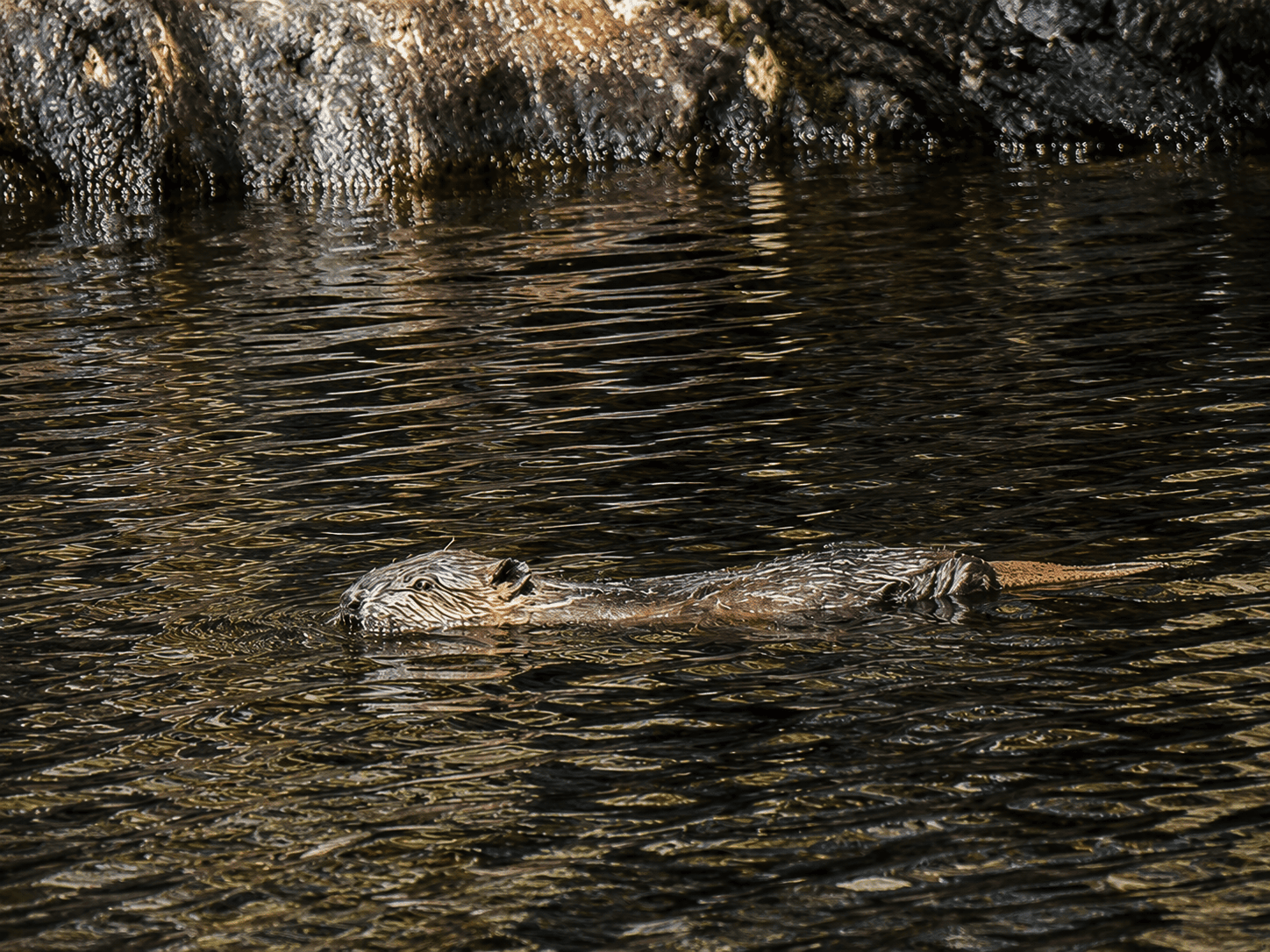
Good news arrives in my inbox. A press release from Trees for Life announces the first beaver kits in 400 years born in Glen Affric in the Scottish Highlands.
It comes with endearing images and video of a furry kit swimming and playing with its mother. A success story. Evidence that an ambitious, sometimes controversial, wildlife reintroduction project is now working well.
A good news story is rare these days. It was widely shared. When I spotted it again on LinkedIn I added to the congratulatory comments but wondered if beavers would be at risk from mink released across the UK with less celebration 30 years ago.
Reassurance came quickly.
Fay Young mink pose no threat to beavers (have you seen the size of those teeth!) but they have caused a huge decline in water vole populations.
I haven’t seen those teeth (or a beaver for that matter), but I have watched a mink hunting around Pond Cottage. A formidably efficient killing machine has not only cleared our pond of wildfowl but also produced its own kits. We want rid of them.
So this is a tale of two waterside species. And the often contradictory behaviour of the human species. Native beavers – hunted to extinction in Scotland in the 16th century for their pelts, meat and musk oil – are being carefully reintroduced in some parts of Scotland to improve the healthy biodiversity of our waterways, wetland and wildlife.
Meanwhile, American mink are running wild across the UK because these thickly-coated close relatives of otters, pine martens, stoats and weasels are also prized for their pelts. Mink (officially known as Neogale vision) were brought into Britain to set up fur farms in 1929, first in England, and then into Scotland in 1938.
Feral fur coats
Many escaped, almost immediately in Scotland. Mink populations spread quickly, occasionally given a helping hand by animal rights activists. It was perhaps a kind of early rewilding but with disastrous unintended consequences. When the Animal Liberation Front released 6,000 mink from Hampshire fur farms in 1998 they insisted there was no risk to the local ecology.
No? According to an old BBC report, PC Rob Harris of the Hampshire police disagreed. “They’ll eat anything that moves, and if cornered, they’re likely to have a go at humans too,”
Fur farming has been banned in the UK since the Fur Farming (Prohibition) Act of 2000. But by then the feral fur coats were eating their way across Britain. And they eat a lot.
Anything that moves, as PC Harris said. The Scottish Invasive Species Initiative is more precise:
Mink are carnivores and eat a wide variety of prey including rabbits, water voles, rats, birds, eggs, fish and domestic fowl. They are an opportunistic hunter taking whatever prey is available at the time. SISI
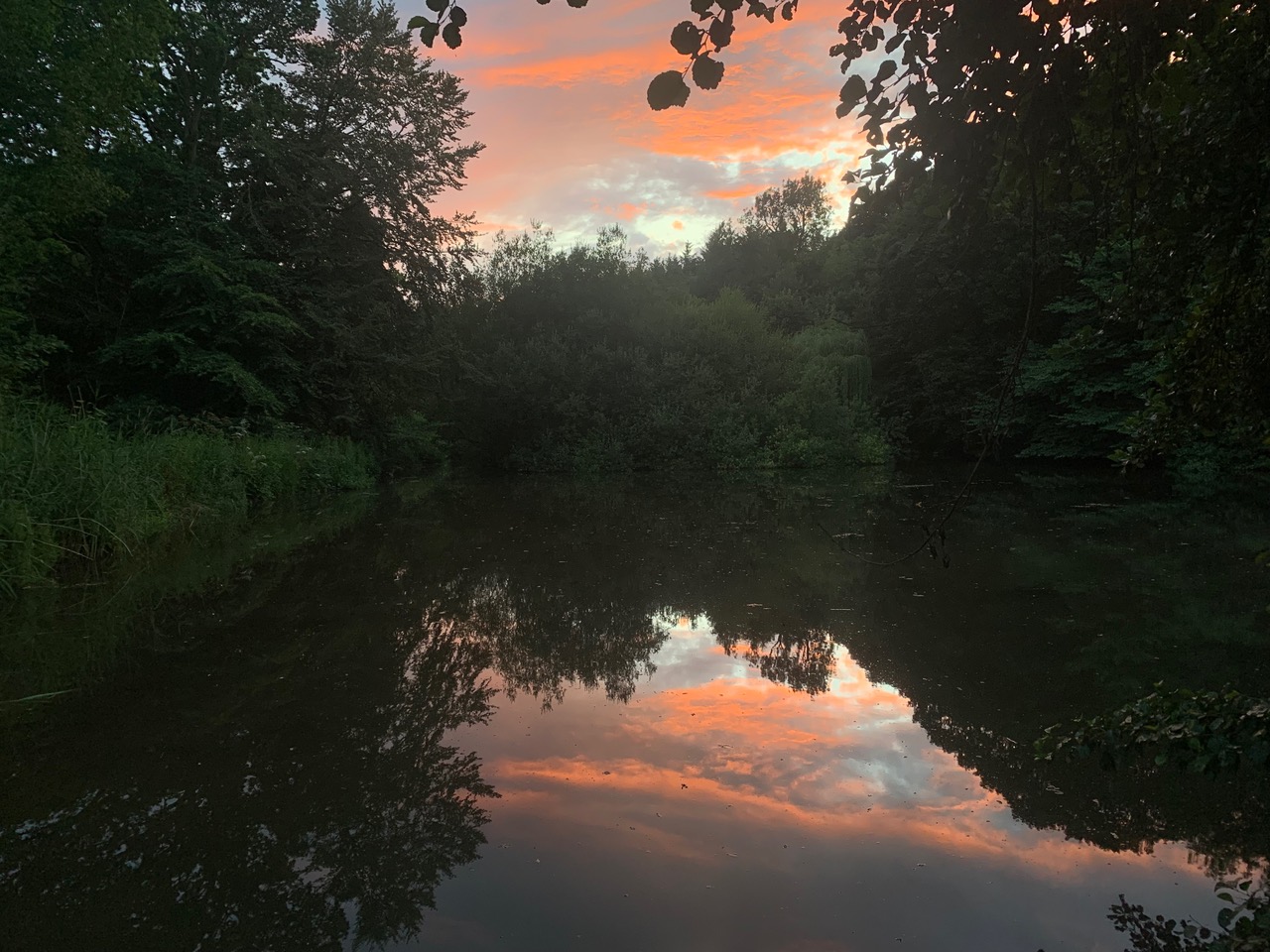
Our proof is on the pond. This spring our pond was busy with ducks and more ducklings than I could count. Last year moorhens led their chicks through reeds taking care not to get too close to the swan adults with six handsome cygnets. Now the wide expanse of water is empty apart from a flash of kingfishers and ripples of the fish they seek. Visiting swans stay just a few hours. Nothing else moves.
What has happened? For over 20 years we had seen no sign of mink following what seemed like a successful Tayside eradication programme in 2004. Supplied with traps for humane ‘despatch’, we caught and despatched just one. It wasn’t an experience any of us enjoyed. However swans and ducks soon moved back in and survived occasional otter raids (In fact a local gamekeeper assured us the otter was keeping the mink away).
A nasty surprise then, in June this year, to look out the window and see an adult mink hunting in broad daylight, fearlessly using the garden path on frequent expeditions to and from the stream bank. Trapping and despatching is definitely not our skill set. What could we do?
SISI to the rescue
We are very grateful to the My Scottish Garden group on Facebook who recommended the Scottish Invasive Species Initiative. And even more grateful to the dedicated young team who responded almost immediately.
We are now part of the Perthshire and North Fife area in the Tayside catchment scheme (working closely with Nature Scot). Three smart traps have been strategically placed on streams into and out of the pond where this year’s young are likely be dispersing in search of new hunting grounds. Mink trapping technique has progressed a good deal in 20 years.
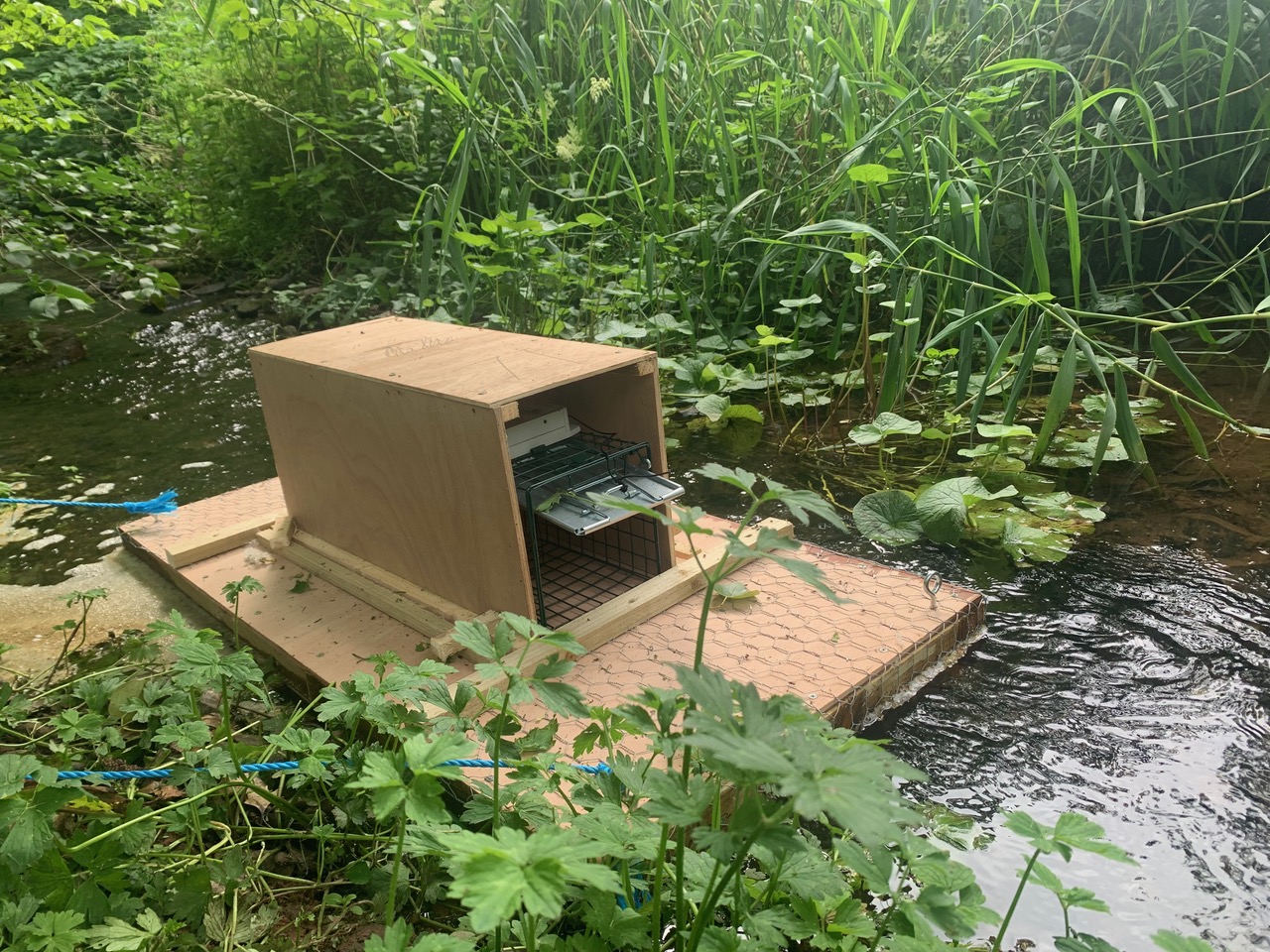
Smart traps are programmed to text me when they have been activated. All we have to do is check what’s inside and contact our project officers. They are an impressive bunch, hard working, quick to answer, thoughtful, sympathetic…and kind to novices like me.
Perhaps a little anxious the first time the trap was activated – and yes it was a mink inside – I contacted the duty officer.
“Good morning. We have caught a monk at Pond Cottage…”
Somewhat embarrassed, I quickly corrected: “A mink of course”
Glad to hear it, the duty officer replied dead pan: despatching monks was above his pay grade.
But the team takes the task seriously, approaching it with great sensitivity and care. No-one in conservation enjoys killing any living creature. I sometimes feel almost sorry for these small sleek creatures. They are simply in the wrong place. In their natural North American environment mink are prey for coyotes, wolves, bears… and human fur trappers. Here, mink are a human-made problem and humans, top of the food chain, have to deal with it. As our local project officer puts it: “You can’t have biodiversity and mink.”
What about the beavers?
Mink predation is not the only problem we face. With the impact of accelerating climate change, the pond is filling with silt washed downstream in heavy flood waters. Would beavers help to improve the water and the wetland? How would local farmers and other landowners react?
Such questions open up what has become known as a ‘wicked problem’ in conservation. Full of complexity and sometimes conflicting views: it all depends on how and where the beavers arrive. A fascinating research report, Conflicts over wildlife conservation: learning from the reintroduction of beavers in Scotland by the British Ecological Society in 2020, describes the impact of reintroduction in different parts of Scotland since the beginning of the century.
There was little or no controversy in 2009 when the official, science-led trial project (by then Scottish Natural Heritage) brought beavers to Knapdale, Argyll. It was more wickedly problematic in 2001 when beavers were accidentally and illegally released in – of all places – Tayside, on the River Tay and River Earn catchments
That was then. SNH now Nature Scot (which ‘has been investigating the issues around beavers and beaver reintroduction since 1995’) has provided the Scottish Government with best practice guidance for beaver reintroduction.
So the Trees for Life press release (working in collaboration with Forestry and Land Scotland and Beaver Trust) stresses “extensive consultations with local communities and land managers” and long-term monitoring of how beavers settle in the landscape.
Good news then in Glen Affric where beavers, a protected species since 2019, are part of a handsome rewilding landscape celebrating the happy arrival of the next generation.
Good news too at Pond Cottage where we have so far caught five mink (all male) with the help of the Tayside catchment scheme. Here’s to a near future return of ducks, swans, moorhens – and water voles coming home.
Feature image: Beaver kit at Glen Affric, credit Trees for Life
Further reading
Beavers in Scotland: Nature Scot
Conflicts over wildlife conservation: British Ecological Society
What we do: Trees for Life
Looking after Scotland’s Forests and Land: Forestry and Land Scotland
Restoring Beavers to regenerate landscapes: Beaver Trust


Leave a Reply